July 21, 2026
As our loved ones age, maintaining autonomy within their own living space becomes a primary focus, particularly for those determined to remain in familiar environments. Multilevel homes, however, introduce unique architectural challenges. Navigating structural staircases safely becomes a substantial source of anxiety for aging individuals and their families. To counter this hazard, installing a home stair lifts system serves as an invaluable, transformative solution. These adaptive devices offer a vital tool to ensure physical safety, expand indoor mobility, and significantly prolong independent senior living.
The physical layout of traditional housing can quickly become hazardous when age or medical conditions diminish an individual's balance. Driven by a fierce desire to preserve personal autonomy, many seniors seek practical home modifications to extend their residency comfortably. This article examines the indispensable role assistive technology plays in promoting senior self-sufficiency, highlighting how modern installations resolve logistical barriers while providing profound peace of mind for family caregivers.
Understanding the Need for Home Accessibility
The global population is shifting older at an unprecedented rate. According to data from the U.S. Census Bureau, by the year 2030, one in every five United States residents will be of retirement age. This massive demographic transition highlights a critical, rising demand for age-friendly residential adjustments that help older adults sustain independent lifestyles. Because traditional multilevel houses were rarely designed with aging bodies in mind, adding assistive technology is frequently required to keep these properties functional.
A troubling reality is that a vast portion of seniors face significant daily mobility challenges due to natural changes in strength, bone density, and coordination. Structural staircases represent the single largest barrier to full home access for individuals managing chronic conditions like severe arthritis, advanced osteoporosis, or progressive muscle weakness. "According to AARP, over three-quarters of U.S. adults aged 50 and older want to remain in their current homes, but 1 in 10 individuals over 65 face difficulties living in their residences, including climbing stairs." This dynamic makes adapting the home environment to match the changing physical realities of its occupants an absolute necessity. Utilizing specialized home stair lifts offers a practical, immediate answer to this widespread safety crisis.
Furthermore, statistics regarding residential falls painted a dangerous picture for unassisted seniors. Data compiled by the Centers for Disease Control and Prevention confirms that accidental falls are the leading cause of both fatal and non-fatal injuries among adults aged 65 and older. The collision of declining vision, reduced reflex speeds, and muscle loss creates an incredibly hazardous environment on standard staircases. A single misstep can result in debilitating fractures or severe head trauma, frequently leading to permanent institutionalization. Implementing modern home stair lifts functions as an effective preventive healthcare measure, establishing a structural safeguard that drastically reduces fall risks.
How Mechanical Lifts Promote Daily Safety
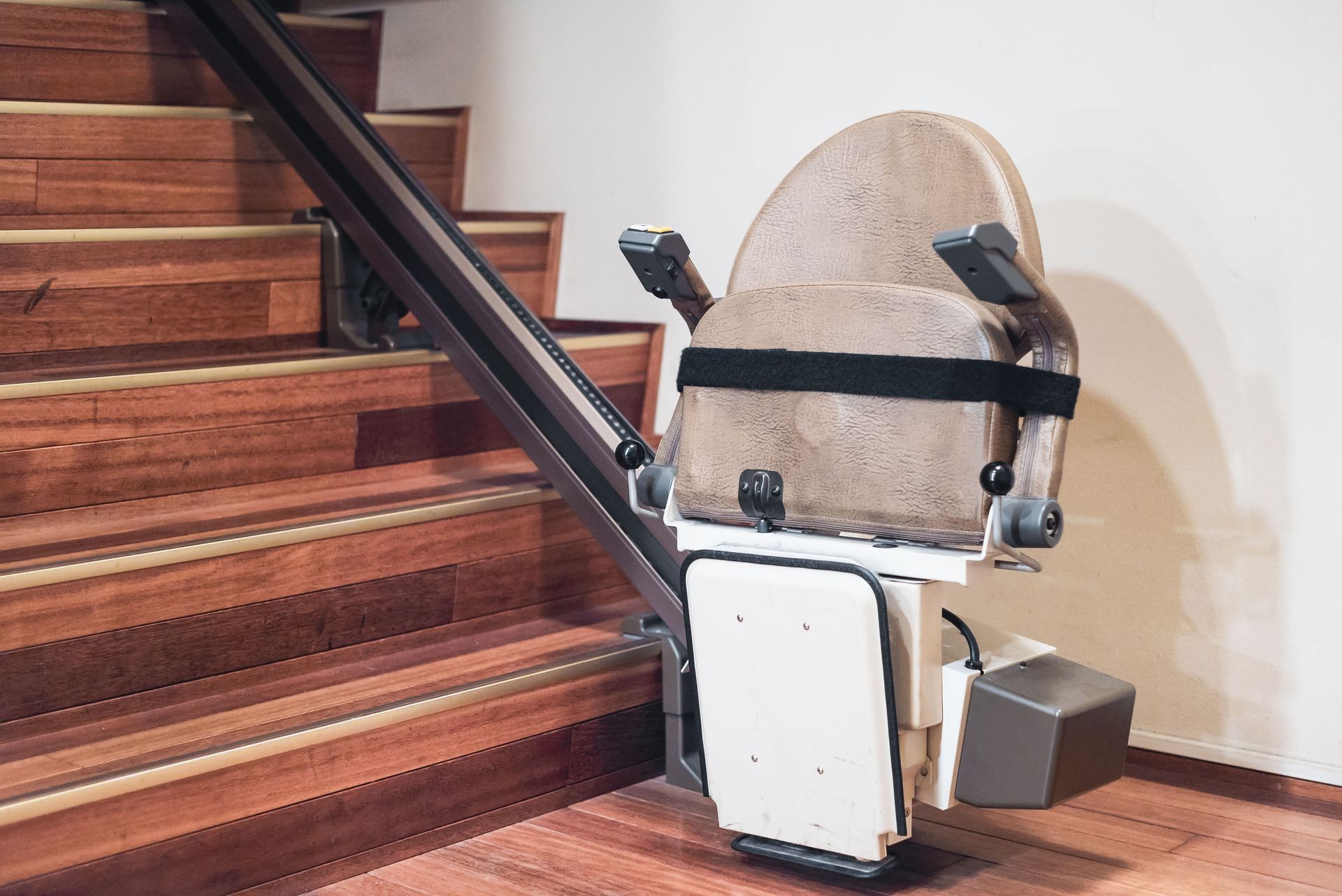
The primary benefit of integrating a mechanical lift into a multi-story house is the immediate, verifiable reduction in residential fall hazards. By providing a securely belted, stable seat that glides smoothly up and down the architectural incline, these devices eliminate the joint strain and balance issues that make staircases dangerous.
Beyond the obvious physical protection, the safety benefits of reliable home stair lifts extend deep into a senior’s psychological well-being. Climbing stairs unaided often creates deep daily anxiety. Eliminating this fear restores a senior's confidence, empowering them to navigate their entire home freely without feeling trapped on a single floor.
Modern accessibility systems are explicitly engineered with several layered safety mechanisms:
- Obstruction Sensors: Built-in sensors automatically stop the motorized chair if an object, pet, or piece of clothing blocks the track.
- Battery Backup Systems: Continuous backup power ensures the chair remains fully operational during local electrical blackouts, preventing users from getting stranded between floors.
- Swivel Seats: The chair pivots securely at the top landing, allowing the user to stand up directly onto solid flooring rather than stepping out over the edge of the stairs.
Streamlined Installation and Environmental Navigation
A common misconception among families is that making a home accessible requires invasive, messy architectural renovations. In reality, installing home stair lifts is an exceptionally efficient and clean process.
The low-profile motorized rail systems are secured directly to the stair treads themselves, rather than the adjacent drywall. This clever engineering means the structural integrity of your home remains completely untouched, allowing the track to be cleanly removed in the future if the property is ever sold. Certified technicians can typically complete a standard straight-run installation in just a few hours, providing an immediate safety upgrade with minimal disruption to the household routine.
Once installed, these units are highly user-friendly, utilizing intuitive toggle controls that require very little manual dexterity or technical comfort. Users simply press a smooth directional switch to glide safely between levels at a controlled, gentle speed.
This effortless movement completely rejuvenates a senior's relationship with their living space. Levels that had become closed off due to physical limitations—such as upstairs bedrooms, basements, or laundry areas—are safely reconnected to their daily lives. This comprehensive building access prevents the isolation of being restricted to a single floor, allowing seniors to maintain active ownership over their daily routines, household hobbies, and domestic responsibilities.
Financial Viability and Aging in Place
When analyzing the economics of senior care, investing in targeted home accessibility modifications is incredibly cost-effective compared to the recurring fees of professional care facilities.
The cost of a home stair lifts system represents a stable, predictable, one-time expenditure that immediately secures the home for years to face. Conversely, transitioning into a managed senior facility involves expensive, compounding monthly rent and care fees that can rapidly exhaust personal retirement savings.
Furthermore, choosing to modify the home allows families to completely avoid the expensive hidden costs of relocation, such as packing services, real estate commissions, and down-sizing stresses. By transforming a multi-story property into a safe environment, seniors protect their financial independence while remaining anchored in the communities, neighborhoods, and houses they love.
Custom Engineering for Diverse Staircase Designs
A critical factor that dictates how assistive technology integrates into a multi-story residence is the physical shape of the staircase itself. Home layout designs generally fall into two primary categories, each requiring a fundamentally different approach to track engineering and installation.
- Straight Staircases: These represent the most straightforward configuration. Because the steps move in a single, uninterrupted line from the top landing to the bottom, the system can utilize standardized, pre-fabricated straight rails. These tracks are quickly sized to the staircase length on-site, making them an incredibly cost-effective and swift safety solution.
- Curved Staircases: Properties that feature custom landings, intermediate turns, spiral steps, or dramatic architectural bends require a highly customized approach. For these layouts, a standard straight rail will not function. Instead, engineers must map the precise angles of your stairs using digital measurements to construct a custom-curved rail system that snakes safely around every corner.
Preserving independence for our seniors requires looking ahead and proactively removing the physical barriers that threaten their safety. Left unaddressed, standard staircases change from a normal architectural feature into a hazardous obstacle that can compromise an older adult's autonomy in an instant. Incorporating dependable home stair lifts into a residence neutralizes this risk, safely bridging the gap between changing physical abilities and multi-story home layouts. This small change transforms a dangerous house back into a secure, lifelong haven.
When you are ready to eliminate the fear of falls and secure absolute peace of mind for your family, partner with the local experts at Mobility Driven. Their professional team is dedicated to matching your home with the perfect custom accessibility solutions, ensuring you can navigate every single level of your life with confidence, comfort, and complete independence.